Honest comparisons, real safety standards, and zero fabricated reviews. Everything parents need to choose the right stroller.
Your lifestyle determines your stroller. Answer these four questions and the right category will be obvious.
City sidewalks favor compact folds. Suburbs and rural areas favor bigger wheels and suspension.
Frequent flyers need a lightweight that fits overhead. Weekend trippers are fine with a trunk-friendly fold.
One child now but planning more? A single-to-double like the Vista V3 or Mockingbird 3.0 saves buying twice.
Runners need three wheels, a lockable front, and a hand brake. Casual walkers are better served by a standard four-wheel design.
Six categories covering every riding style, family size, and budget.
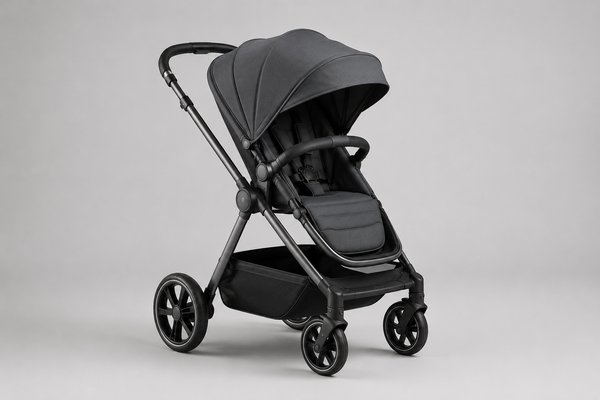
The everyday workhorse. Deep recline seats, large canopies, oversized storage baskets, and all-wheel suspension. Brands like UPPAbaby Vista V3, Bugaboo Fox 5, and Nuna MIXX Next set the standard, while the Mockingbird 3.0 delivers premium features at a mid-range price.
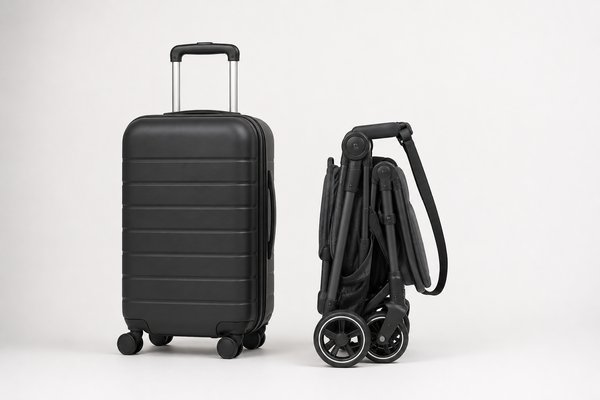
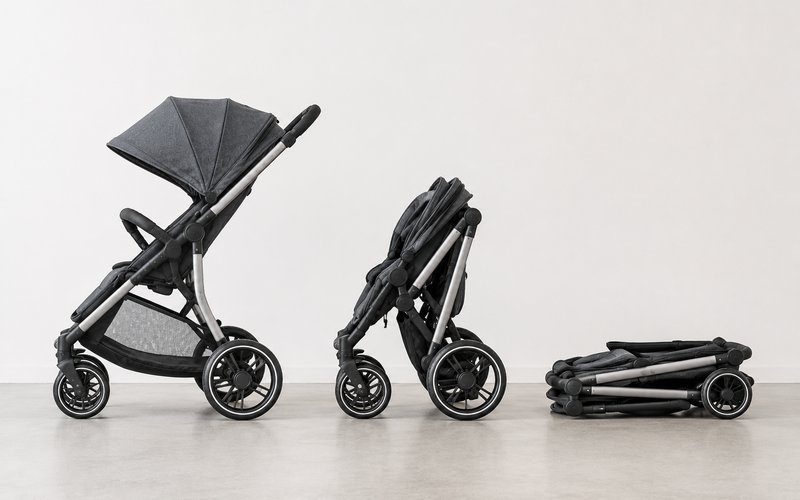
Compact tri-fold designs that fit in overhead bins and car trunks. Typically 13–18 lbs vs. 25–30 for full-size models. Look for the Stokke YOYO3, Joolz Aer, and Nuna TRVL for premium options, or the Bombi for budget-friendly portability.
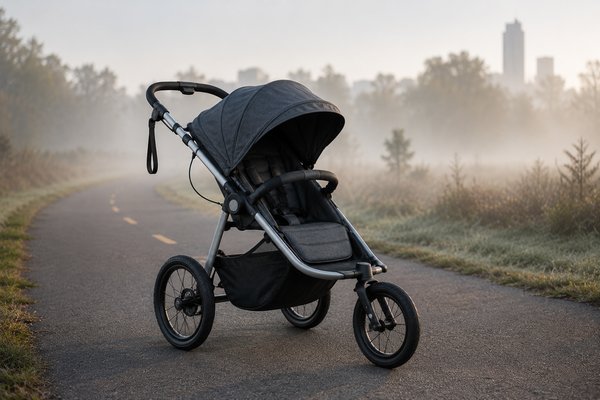
Three-wheeled designs with air-filled tires, lockable front wheels, and hand brakes for active parents. The BOB Revolution Flex 3.0 excels on rough terrain with adjustable suspension, while the Thule Urban Glide 2 is lighter and sleeker for paved paths.
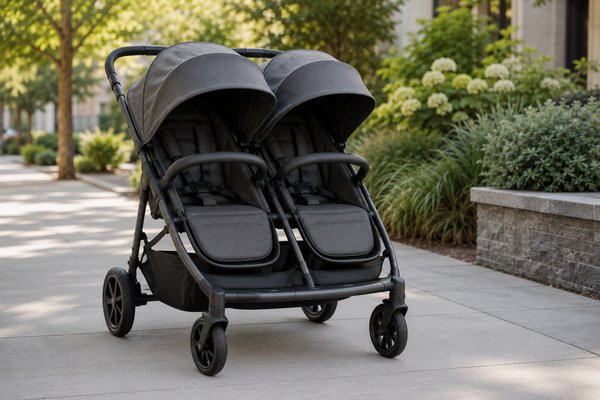
Side-by-side models for twins or tandem configurations for siblings with an age gap. The Bugaboo Donkey 6 leads side-by-side, the UPPAbaby Vista V3 expands from single to double, and the Graco Ready2Grow offers standing and bench options for older kids.
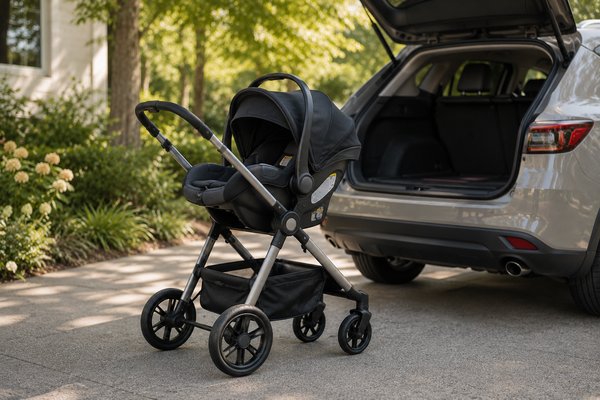
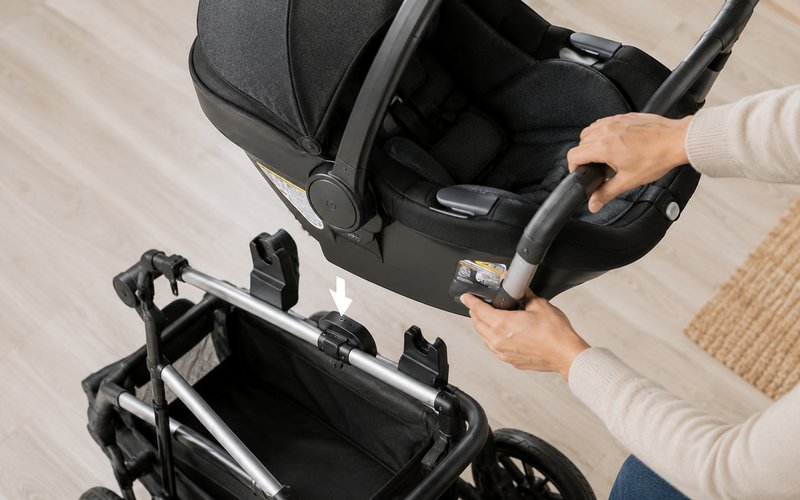
Stroller frames with click-in infant car seat compatibility for seamless car-to-stroller transitions. Most major brands offer adapters for cross-brand compatibility. Check which car seats work with your stroller frame before buying.
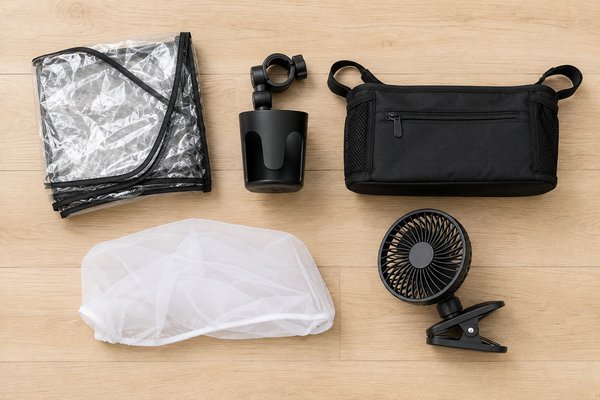
Rain covers, cup holders, stroller organizer bags, mosquito nets, clip-on fans, snack trays, and ride-along boards for older siblings. Small upgrades that make a big difference in daily usability.
From morning walks and grocery runs to airport gates and weekend parks. The right stroller makes every outing easier.
Read the Buying GuideThe features, standards, and details that actually matter when choosing a stroller.
Every stroller sold in the United States must comply with the federal safety standard at 16 CFR Part 1227, which incorporates ASTM F833-21. This standard covers braking, stability, restraint systems, folding mechanisms, wheel attachment, and entrapment prevention. Look for compliance references on the product label or documentation.
JPMA certification (now administered by the Baby Safety Alliance) is a voluntary third-party verification that goes beyond the mandatory federal requirements. Products are tested by CPSC-accredited labs and re-tested annually. Over 2,500 products across about 30 categories carry this certification. While not required by law, it provides an additional layer of confidence.
For international standards, look for EN 1888 (Europe) or ISO 31110. If buying a used stroller, always check the CPSC recall database and verify that the model still meets current safety standards.
One-hand folds, two-step folds, and tri-fold designs each trade off between compactness and ease of use. Travel strollers typically fold smallest but sacrifice seat size. Full-size models fold larger but often self-stand for storage.
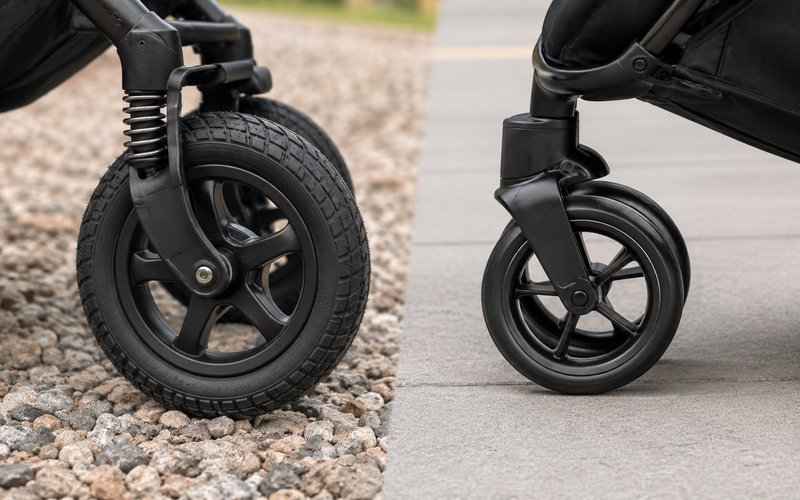
Air-filled rubber tires absorb bumps on trails and rough sidewalks but can puncture. Foam-filled and hard-rubber wheels are maintenance-free and better for smooth urban surfaces. All-wheel suspension systems smooth the ride regardless of wheel type.
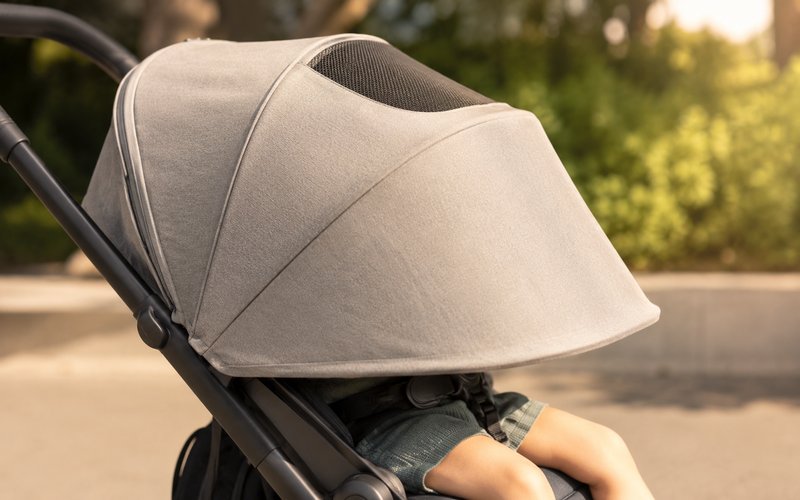
Look for UPF 50+ rated canopies with multi-position extension, mesh peek-a-boo windows for ventilation and visibility, and full coverage that reaches past the footrest. Premium canopies include magnetic closures and zip-out extensions.
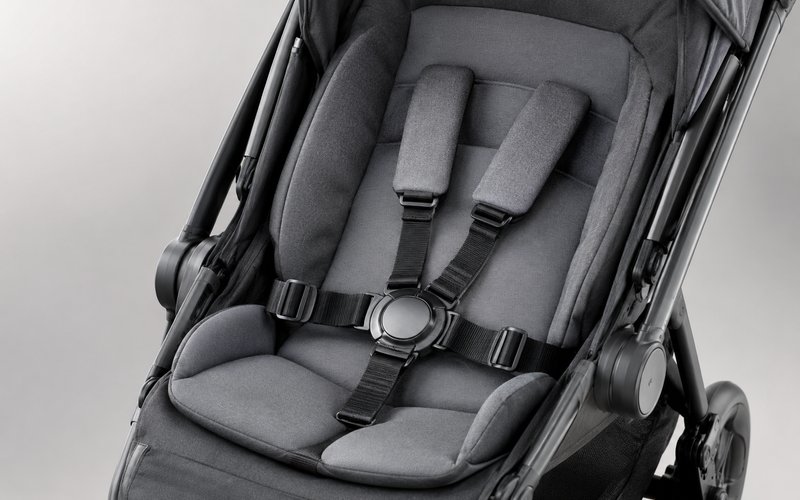
All strollers sold in the U.S. must comply with ASTM F833-21 harness requirements. Look for padded shoulder straps, no-rethread height adjustment, and magnetic or one-hand buckle closures. The harness should fit snugly with no more than one finger of space at the collarbone.
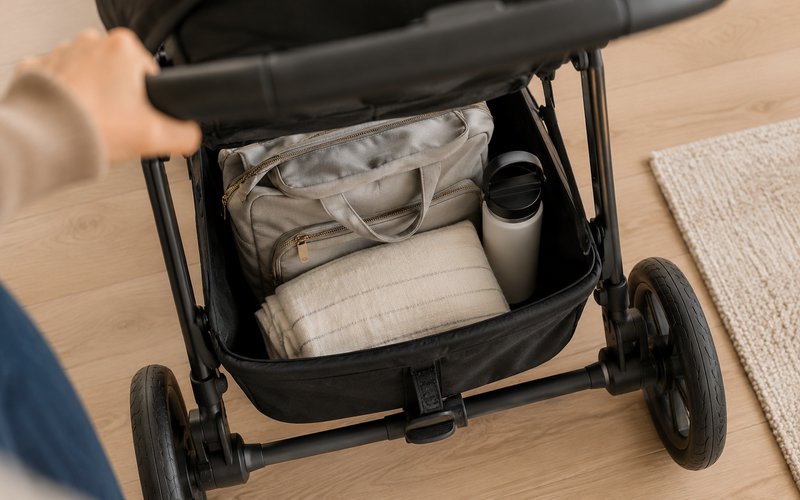
Under-seat storage baskets vary dramatically. Budget models might hold 5–10 lbs; premium full-size strollers like the UPPAbaby Vista V3 hold 25+ lbs and fit a full diaper bag plus groceries. Access matters too: some baskets are blocked by the seat recline or the frame crossbar. Test basket access with the seat fully reclined before committing.
A travel system pairs an infant car seat with a compatible stroller frame using click-in adapters. Same-brand pairings (like UPPAbaby Mesa + Vista, or Chicco KeyFit + Bravo) usually click in without adapters. Cross-brand compatibility requires separate adapters, which most premium stroller brands sell for major car seat lines including Nuna, Cybex, Maxi-Cosi, Graco, and Chicco.
Planning ahead? Check our companion guide at CarSeatGuide.co for car seat comparisons and compatibility charts to pair with your stroller choice.
Brands like Graco, Chicco, and Evenflo. Solid safety compliance, functional designs, typically heavier with fewer premium materials. Great for occasional use or as backup strollers. Many include car seat compatibility out of the box.
The Mockingbird 3.0, Baby Jogger City Mini GT2, and BOB Revolution Flex 3.0 live here. Premium features like single-to-double expansion, all-wheel suspension, and adjustable handlebars at significantly lower cost than luxury brands.
UPPAbaby, Bugaboo, Nuna, Cybex, and Stokke. Superior materials, OEKO-TEX certified fabrics, extensive accessory ecosystems, and strong resale value (typically 50–65% of original price). Buy once, use through multiple children.
Choosing a stroller is half the equation. Find the right infant car seat to pair with it.
Visit CarSeatGuide.co →Affiliate Disclosure: StrollerGuide.co participates in the Amazon Services LLC Associates Program and the eBay Partner Network. We earn commissions from qualifying purchases at no extra cost to you. All recommendations are based on independent research. Learn more.